

Menu
Industries
 Meat, Fish & Poultry
  Confectionery
  Bread & Pastry
  Dairy
Dairy  Coffee & Tea
  Nuts & Grains
  Pharmacy
  Pet food
More information
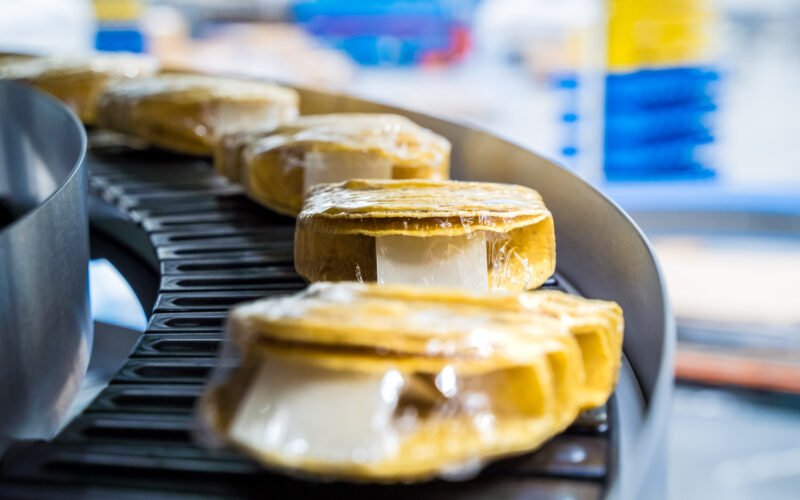
Hellings designs and manufactures safe, hygienic and durable customised machines for end users and OEMs in the food, pet food and pharmaceutical industries
 Buffering
  Distribution & Spreading
  Merging
  Levelling
  Rejects
  Twisting
  Counting
  Weighing
  Stacking & Forming
  Detection
 Belt conveyors
 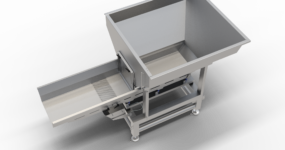 Vibratory conveyors
 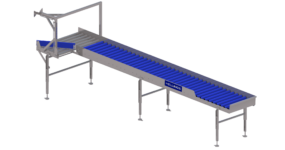 Roller conveyors
 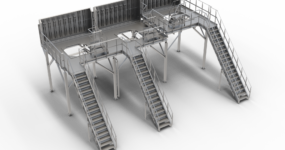 Platforms
 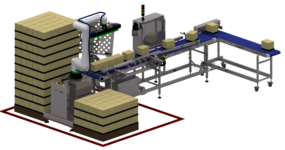 Robotics solutions
 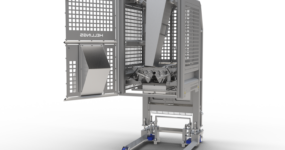 Distribution systems
 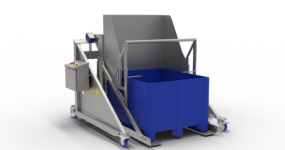 Tippers & Lifts
 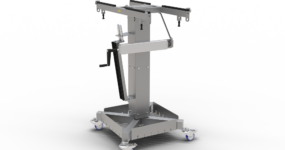 Format trolleys
 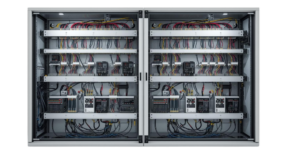 Control & Software
 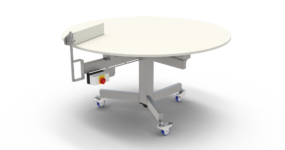 Turntables
 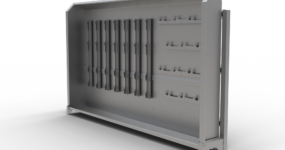 Wash walls & washing racks
 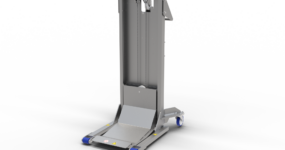 Film roll trolleys
 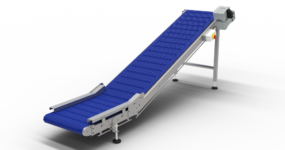 Take-away conveyors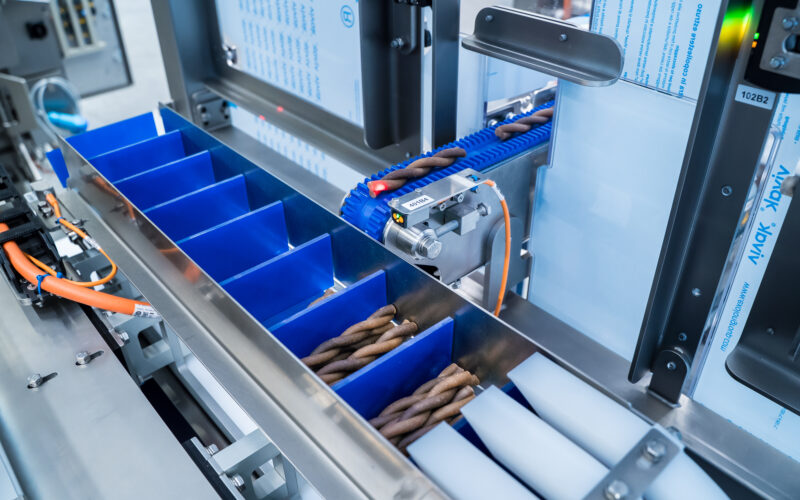
Menu
How to control food safety risks
Hygienic belt conveyors
Product residues, moisture and hard-to-reach areas make conveyor belts in food processing particularly susceptible to contamination and other hygiene risks. Especially in sectors such as meat, dairy and bakery, production environments have stringent hygiene requirements. When product residues or moisture remain in hard-to-reach areas, cleaning takes longer than necessary or components are difficult to inspect, leading to downtime, additional audits and, in some cases, product recalls. That is why cleanability and inspectability have become key principles in the hygienic design of conveyor systems.
What is a hygienic belt conveyor?
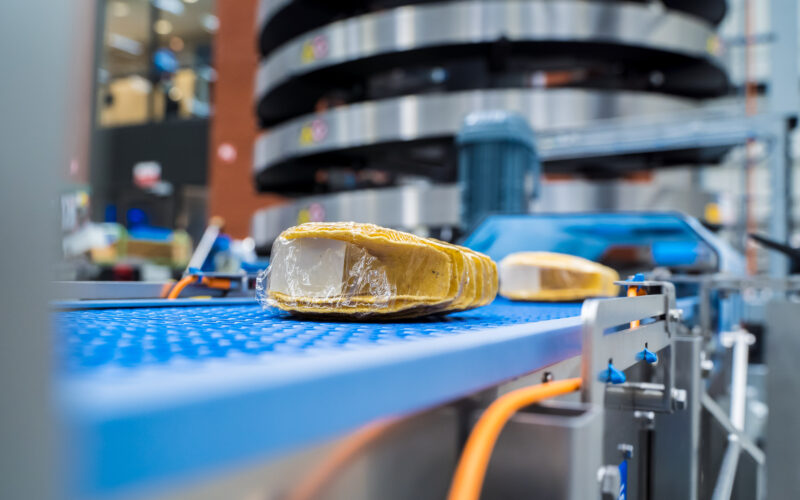
A hygienic belt conveyor is designed to limit food safety risks throughout its entire life cycle – from use and cleaning to maintenance. Hygienic design therefore goes beyond material choice alone.
A stainless steel frame does not automatically make a belt conveyor hygienic. The design determines whether product residues, moisture and dirt can remain behind during production and cleaning. That is why cleanability, inspectability and accessibility play a central role within hygienic design.
Why traditional belt conveyors often fall short
Many traditional belt conveyors are designed for moving boxes, crates and other packaged goods. Hygiene is usually not a decisive factor there. In the food industry things are different. There, belt conveyors regularly come into direct contact with unpackaged products and contamination must be prevented. That is why easy cleaning and good inspectability are essential.
Standard belt conveyors are not always designed for this. Parts are sometimes difficult to reach, allowing product residues and moisture to remain behind. This not only increases food safety risks, but also leads to longer cleaning cycles. The result is more manual cleaning work, longer downtime and a greater dependence on operators. A hygienic design prevents these bottlenecks as early as the design phase by putting cleanability, inspectability and a well-considered choice of materials at the centre.
When is a hygienic belt conveyor needed?
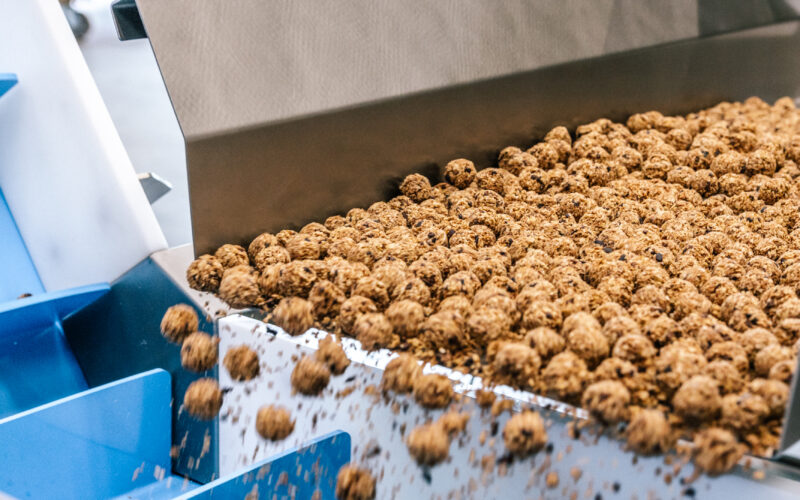
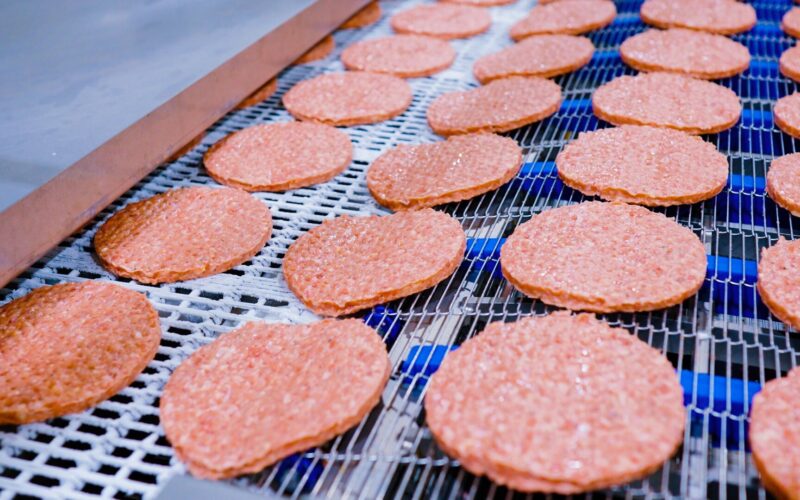
A hygienic belt conveyor is needed when it directly or indirectly affects food safety. This is particularly the case when unpackaged foodstuffs are processed and the risk of contamination must be controlled. Not every production environment requires the same level of hygiene.
A production line for raw meat or dairy, for example, places higher demands on the design of a belt conveyor than a line for packaged snacks or dry bakery products. The nature of the product, the production process and the cleaning method ultimately determine which hygiene requirements apply.
Which hygiene requirements apply to my production process?
Food producers are required to analyse the food safety risks within their production process according to the principles of HACCP (Hazard Analysis and Critical Control Points). Based on this, the necessary hygiene measures are determined, which belt conveyors must also comply with.
In addition, the EHEDG guidelines and the European Machinery Regulation (formerly the Machinery Directive) provide guidance for hygienic design. They help machine builders and food producers to take food safety, cleanability and machine safety into account as early as the engineering phase. Hygienic design is therefore not a separate choice, but an integral part of risk management.
How do you translate those requirements into a hygienic design?
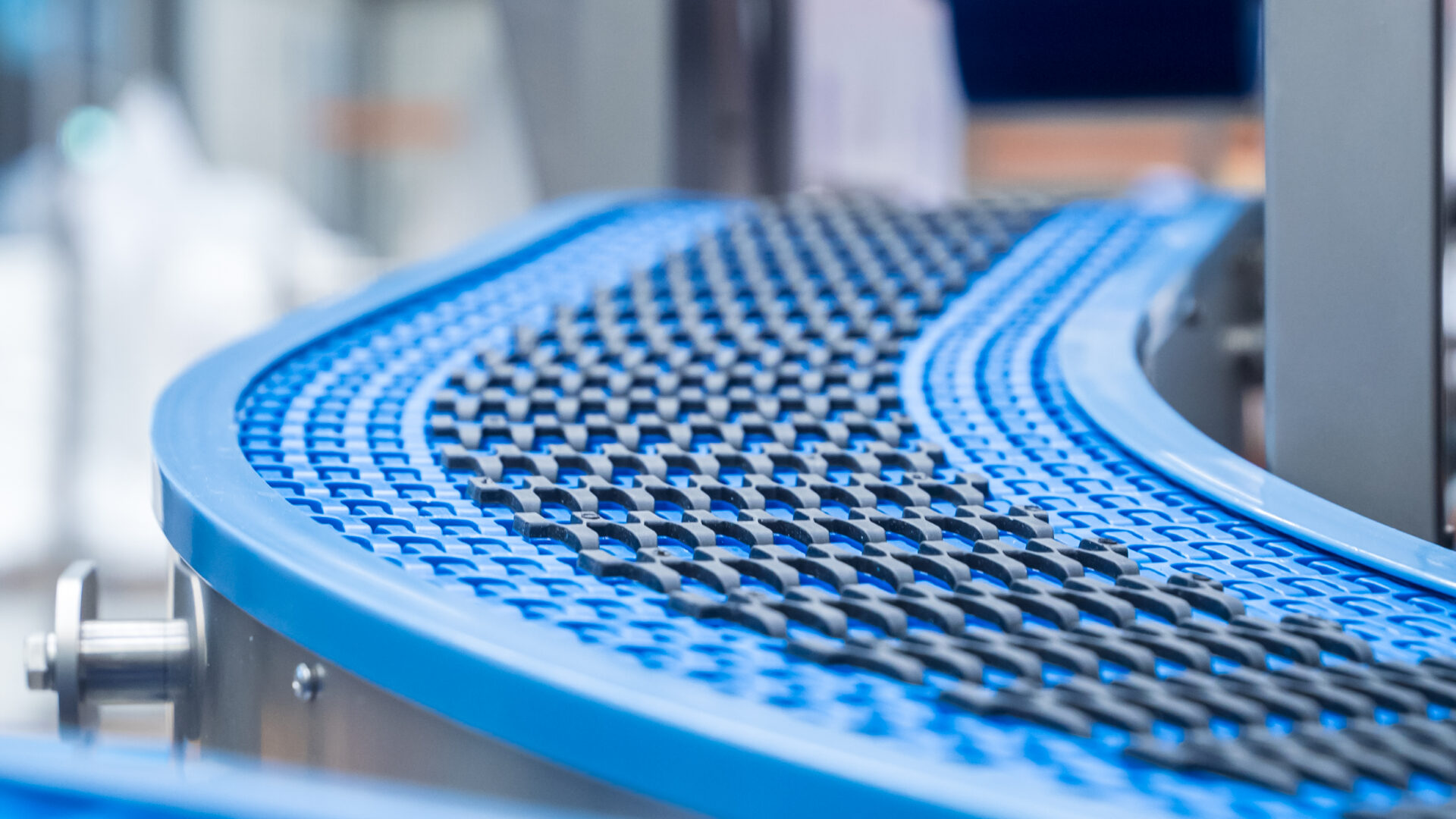
The outcome of the risk analysis forms the starting point for the design of the belt conveyor. Factors such as product properties, product flows, cleaning method, capacity and available space determine which construction, materials and components are suitable. A belt conveyor for dry powders, for example, requires different design choices than an installation for raw meat or cut vegetables.
How do you recognise a hygienic belt conveyor?
A hygienic belt conveyor is designed to prevent contamination, to be easy to clean and inspect, and to withstand the conditions in which it is used.
Preventing contamination
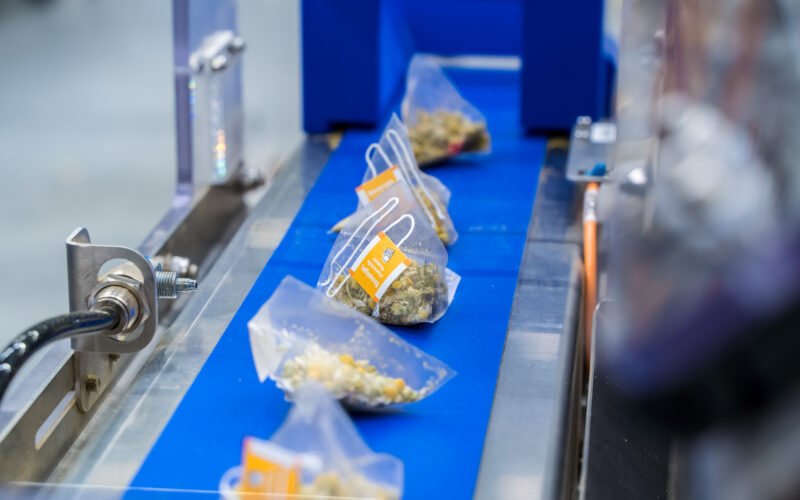
To prevent dirt accumulation, use is made of:
- open constructions
- minimal horizontal surfaces
- smooth connections
- avoiding hollow spaces or dead corners
Cleanability
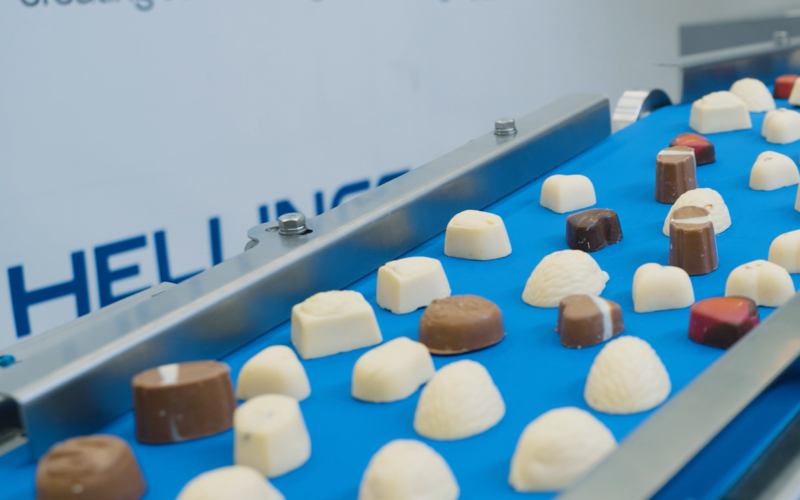
Important design choices for good cleanability are:
- direct accessibility of all surfaces
- good inspectability
- easy disassembly
- a design that matches the cleaning process used: dry, wet or foam
Material choice
In food processing, materials are often used such as:
- stainless steel AISI 304 or 316
- plastics suitable for food contact
Materials must be resistant to cleaning agents, moisture exposure, temperature fluctuations and intensive cleaning. Coatings that can be damaged or flake off are avoided.
Hellings: hygienic design as the starting point
Hygienic design requires more than just the right materials or components. It is precisely during the engineering phase that choices are made that determine how well a belt conveyor remains cleanable, inspectable and practically usable within food processing.
That is why Hellings works from design principles that align with guidelines such as EHEDG and methodologies such as HDN/HRA. By including hygienic design early in engineering, you prevent cleaning, inspection or maintenance from becoming unnecessarily complex or causing problems later on.
Hellings: hygienic design as the starting point
Hygienic design requires more than just the right materials or components. It is precisely during the engineering phase that choices are made that determine how well a belt conveyor remains cleanable, inspectable and practically usable within food processing. That is why Hellings works from design principles that align with guidelines such as EHEDG and methodologies such as HDN/HRA. By including hygienic design early in engineering, you prevent cleaning, inspection or maintenance from becoming unnecessarily complex or causing problems later on.
Demonstrably hygienically designed transport solutions
At Hellings, a hygienic belt conveyor does not start with a standard machine, but with a well-thought-out design. For more than 25 years we have been developing transport solutions tailored to product, process and cleaning. In this way we combine food safety, reliability and efficient production in one solution. At Hellings you can expect the following:
Food safety as the starting point of every design
Hygiene included from the very first design phase
Transparent choices and substantiation towards the customer
Solutions tailored to product, process and cleaning
Design according to the Machinery Directive and EHEDG principles
Risk-driven design substantiated with HRA (Hygienic Design Network methodology)
Contact us
Curious what we can do for your production process?
Our colleagues are happy to think along with you!